
Preschool Chinese Enrichment in Singapore: A Parent’s Complete Guide
- Preschool Chinese Learning
- October 11, 2026
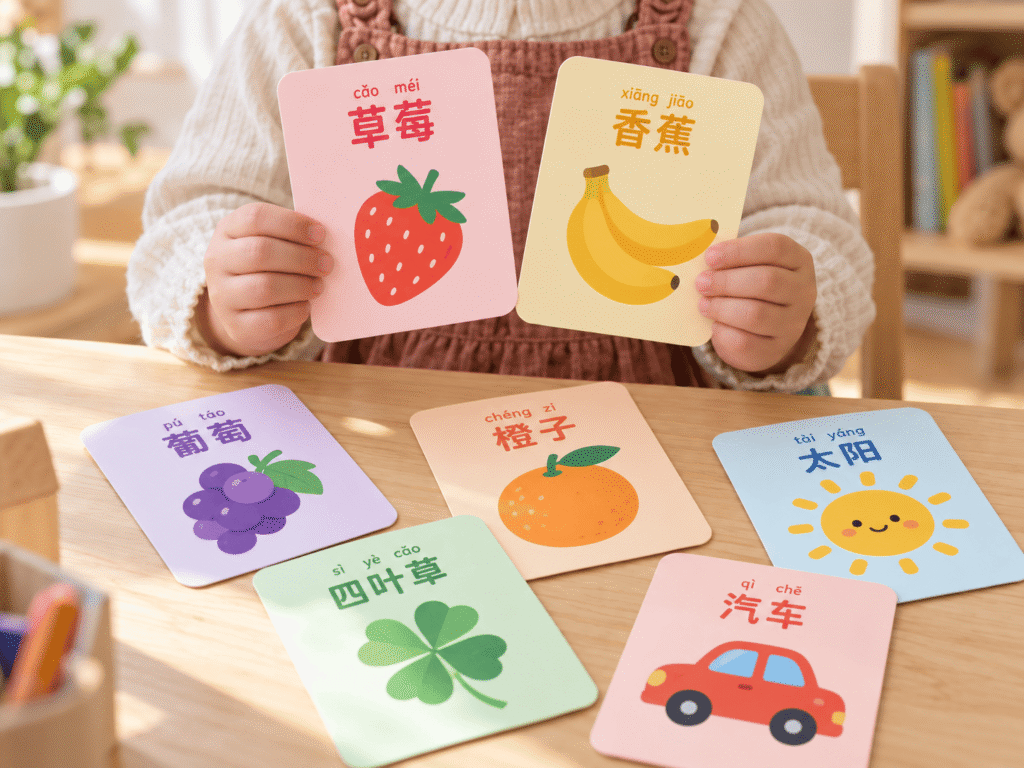
Helping your child build confidence, curiosity and a strong foundation in Mandarin from an early age.
In Singapore, children grow up surrounded by different languages. While Mandarin is an important part of our bilingual education system, many young children are more comfortable speaking English, especially when it is the main language used at home.
For parents, this often raises a familiar question: How can I help my child enjoy learning Chinese before entering primary school?
Preschool Chinese enrichment can be a valuable way to introduce Mandarin through meaningful and age-appropriate learning experiences. Rather than focusing only on memorising Chinese characters, a good enrichment programme helps children develop vocabulary, confidence, early reading skills and a positive attitude towards the language.
In this guide, we explore what preschool Chinese enrichment involves, when children can begin, and how parents in Singapore can choose a suitable programme.
1. What Is Preschool Chinese Enrichment?
Preschool Chinese enrichment refers to additional Mandarin learning opportunities designed for young children, typically from nursery to kindergarten.
Unlike academic tuition, which often focuses on school assessments, preschool enrichment generally places greater emphasis on building early language foundations.
These may include:
Developing vocabulary through familiar everyday topics
Building confidence in using Mandarin
Recognising common Chinese characters
Understanding and enjoying simple Chinese stories
Expressing ideas using basic Chinese words and sentences
Developing curiosity and interest in Chinese language learning
For example, instead of asking a young child to memorise a long list of Chinese characters, a teacher may introduce words such as 苹果 (apple), 香蕉 (banana) and 西瓜 (watermelon) through pictures, storytelling and interactive activities.
Children can then connect new vocabulary with objects and experiences they already recognise.
The goal is to help Mandarin feel meaningful and approachable, rather than becoming another stressful academic subject.
2. Why Is Learning Chinese Early Important in Singapore?
Singapore’s bilingual education environment gives children opportunities to learn both English and their Mother Tongue Language.
However, the amount of Mandarin exposure children receive outside school can vary considerably.
Some children regularly communicate with parents or grandparents in Mandarin. Others mainly use English at home and have fewer opportunities to practise Chinese in everyday conversations.
For children with limited exposure, learning Chinese may initially feel unfamiliar.
Early language activities can help children become more comfortable with Mandarin before they face more structured reading and writing tasks in primary school.
Building confidence through familiarity
When children regularly encounter Chinese words through stories, pictures and familiar situations, the language can gradually become less intimidating.
A child who initially responds in English might begin recognising Mandarin instructions, identifying objects or attempting simple Chinese phrases.
These small steps are meaningful parts of language development.
Developing early reading foundations
Before children can confidently read Chinese sentences, they need opportunities to recognise characters, understand vocabulary and connect written language with meaning.
Picture books and simple stories can introduce these skills naturally.
Encouraging a positive attitude towards Chinese
Young children may lose interest when learning feels overly demanding.
By making language activities enjoyable and achievable, parents and teachers can help children associate Chinese with curiosity, communication and discovery.
Singapore’s Ministry of Education also emphasises interest, communication and meaningful learning experiences in its Nurturing Early Learners framework for Mother Tongue Languages.
3. What Should Children Learn at Different Preschool Stages?
Every child develops at their own pace. Their Mandarin ability also depends on previous exposure, confidence and opportunities to use the language.
Instead of expecting every child to reach identical milestones, parents can focus on suitable learning experiences at each stage.
Nursery: Building familiarity with Mandarin
At the nursery stage, the priority is often helping children become comfortable hearing and responding to Chinese.
Suitable activities include:
Naming familiar animals, fruits, colours and everyday objects
Looking at illustrated Chinese picture books
Following simple instructions with visual support
Answering basic questions through words, gestures or short phrases
At this stage, children do not need to master complex written characters to make meaningful progress.
Kindergarten 1 (K1): Developing vocabulary and expression
As children gain confidence, learning activities can introduce more opportunities for communication and early character recognition.
Examples include:
Describing familiar objects using short sentences
Recognising common Chinese characters in context
Answering simple questions about a picture or story
Sequencing pictures to understand what happens first and next
A child might move from identifying 苹果 to saying 我喜欢吃苹果 (I like eating apples).
The aim is to help children use vocabulary meaningfully.
Kindergarten 2 (K2): Preparing for Primary 1 Chinese
In K2, parents can gradually introduce activities that support the transition to primary school.
These may include:
Recognising commonly encountered Chinese characters
Understanding simple stories and questions
Expressing ideas in short, meaningful sentences
Developing confidence with age-appropriate reading materials
Becoming comfortable with guided learning activities
The goal is not to complete the Primary 1 syllabus before school starts. A more useful focus is helping children build confidence, curiosity and foundational language skills.
4. How Can Parents Make Chinese Learning More Enjoyable at Home?
Parents play an important role in helping children develop familiarity with Mandarin.
Even families who mainly speak English can create simple opportunities for Chinese learning.
Here are five practical ideas.
Read Chinese picture books together
Choose books with clear illustrations, familiar themes and short sentences.
Rather than translating every single word, encourage your child to observe pictures and discuss what is happening.
For example:
你看到了什么? (What do you see?)
小猫在哪里? (Where is the kitten?)
接下来会发生什么事? (What do you think will happen next?)
It is perfectly fine to support your child with English when necessary. Gradually introduce more Mandarin as their confidence grows.
Use Mandarin during daily routines
Everyday activities offer natural opportunities to practise Chinese.
During mealtimes, parents can introduce words such as 吃饭 (eat), 喝水 (drink water) and 水果 (fruit).
When getting dressed, children can practise identifying colours and clothing.
These short interactions make the language relevant to daily life.
Encourage speaking without pressure
Some children understand Mandarin but hesitate to speak it.
Avoid turning every interaction into a test or immediately correcting every mistake.
Instead, acknowledge their attempts and model a natural response.
For example, if your child points to an apple and says “苹果”, you could respond:
“对,这是一个红苹果。”
(Yes, this is a red apple.)
This helps introduce a fuller sentence without discouraging participation.
Explore Chinese through storytelling
Stories introduce new vocabulary and allow children to connect language with emotions, characters and events.
Ask simple questions or invite your child to retell part of the story using pictures.
Keep practice short and consistent
A short, enjoyable Chinese activity that happens regularly can be easier to maintain than an occasional long study session.
The most important factor is creating opportunities for children to interact with the language positively.
5. Preschool Chinese Enrichment vs Chinese Tuition: What’s the Difference?
Although the terms are sometimes used interchangeably, enrichment and tuition can have different priorities.
Chinese enrichment generally focuses on broader language development, including vocabulary, confidence, expression and interest in learning.
Chinese tuition is often more directly connected to supporting schoolwork, addressing specific learning difficulties or preparing for assessments.
For preschoolers, parents may wish to prioritise programmes that offer engaging, developmentally appropriate language experiences.
However, the name of a programme alone does not determine its quality.
The teaching approach, lesson structure and suitability for your child are more important than whether it is described as enrichment or tuition.
6. How to Choose a Preschool Chinese Enrichment Class in Singapore
Not all preschool Chinese programmes are the same.
Before enrolling your child, consider the following factors.
Age-appropriate teaching
A good programme should consider the child’s age, language exposure and learning readiness.
Younger children often benefit from concrete examples, visual materials and interactive activities.
Opportunities to use Mandarin
Children need opportunities to participate, not simply listen to explanations.
Look for activities that encourage vocabulary use, guided conversations and meaningful responses.
Class size and teacher interaction
Smaller groups can provide more opportunities for individual attention, although the quality of teaching and classroom management also matters.
Ask how teachers support children with different levels of Mandarin confidence.
Learning materials and activities
Explore whether lessons include picture books, visual materials, storytelling and suitable reading activities.
You can also ask how the centre introduces Chinese characters and helps children connect vocabulary with meaning.
A positive learning environment
Most importantly, observe how your child responds to the learning environment.
Does the child feel comfortable participating?
Are teachers patient and encouraging?
Is there an appropriate balance between structure, interaction and enjoyment?
These questions are often more useful than choosing a programme based only on the number of Chinese characters children are expected to memorise.
7. When Should Your Child Start Preschool Chinese Enrichment?
There is no single ideal starting age for every child.
Some children benefit from additional Mandarin exposure during nursery, while others begin structured enrichment in K1 or K2.
Consider your child’s existing Mandarin environment, interests and learning needs.
Your child may benefit from additional support if they:
Have limited Mandarin exposure outside school
Show little confidence when using Chinese
Find it difficult to recognise familiar vocabulary
Need additional opportunities to practise language skills
Are approaching Primary 1 and would benefit from stronger foundations
However, struggling with Mandarin at a young age does not automatically mean a child needs formal tuition.
Sometimes, small changes in home routines and greater exposure to enjoyable Chinese activities are a useful starting point.
8. Building a Strong Chinese Foundation with AiWen Culture
At AiWen Culture, we believe that learning Chinese should be a meaningful and engaging experience for young learners.
Our educational focus goes beyond simply remembering words. We want children to develop the confidence to understand, explore and express themselves through Chinese.
For families looking for Chinese learning support in Singapore, it is important to find an approach that respects each child’s learning journey while helping them build a strong foundation for future development.
Interested in learning more about preschool Chinese learning at AiWen Culture?
Explore our Preschool Chinese programme or contact us for a free consultation to discuss your child’s current Chinese learning needs.
Frequently Asked Questions
What is the best age to start Chinese enrichment in Singapore?
There is no universal starting age. Some children are ready for age-appropriate Chinese activities during nursery, while others benefit from enrichment in K1 or K2. The best time depends on the child’s language exposure, interests and readiness.
Is Chinese enrichment necessary for preschool children?
Not every child needs additional classes. Children who already receive regular Mandarin exposure at home and school may have sufficient opportunities to develop their skills. Enrichment can be useful for families seeking more structured learning and language interaction.
How can I help my child learn Mandarin if we speak English at home?
Start with simple activities such as reading Chinese picture books, naming everyday objects and using familiar Mandarin phrases during daily routines. Consistency and positive encouragement are more important than speaking perfect Mandarin.
Should K2 children start learning Primary 1 Chinese in advance?
It is not necessary to complete Primary 1 material ahead of time. Developing vocabulary, listening comprehension, basic character recognition and confidence with simple Chinese sentences can help children feel more prepared.
What should I look for in a preschool Chinese enrichment centre?
Consider the teaching approach, age suitability, class interaction, learning materials, teacher communication and how comfortable your child feels during activities. A suitable programme should support both language development and enjoyment.
Help Your Child Discover the Joy of Learning Chinese
Every child’s language learning journey is different. With suitable guidance, meaningful activities and consistent encouragement, children can gradually build the confidence to use Mandarin in everyday life.
Explore AiWen Culture’s Preschool Chinese Programme
1 to 1 Chinese Coaching, Preschool Foundation, Primary Chinese, Secondary Chinese
No posts found.